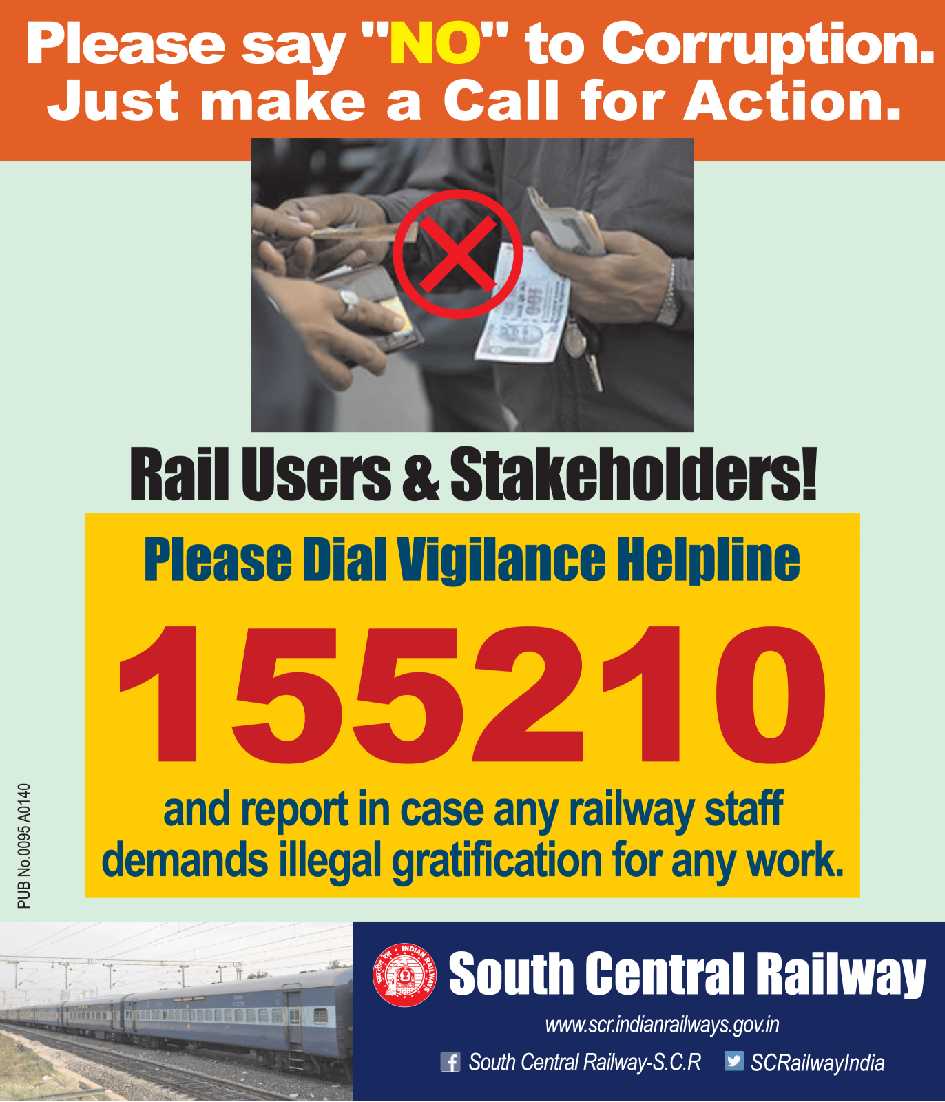
This advertisement was published by South Central Railway in The Hindu Newspaper, Chennai Edition on 25 January 2018. The ad is a powerful public awareness campaign urging citizens to say no to corruption and take action by making a call to report corrupt practices, reinforcing the Indian Railways’ commitment to transparency, accountability, and clean governance in its operations across the South Central Railway zone.
About South Central Railway and This Public Awareness Advertisement
South Central Railway is one of the seventeen railway zones of Indian Railways, with its headquarters in Secunderabad, Telangana. It operates an extensive network of rail routes across Telangana, Andhra Pradesh, Maharashtra, Karnataka, and Madhya Pradesh, serving millions of passengers and facilitating the movement of goods across a large and economically significant part of India.
As a major public sector organisation operating at an enormous scale, South Central Railway is deeply committed to ensuring that its services are delivered with integrity, fairness, and transparency. This anti-corruption awareness advertisement is part of a broader institutional effort to encourage citizens, passengers, and employees to actively participate in the fight against corrupt practices by reporting them through designated channels rather than accepting them as an unavoidable part of dealing with a large government organisation.
The Message Behind “Say No to Corruption”
The campaign message is direct, simple, and action-oriented. By telling readers to “just make a call for action,” South Central Railway empowers ordinary citizens with the knowledge that they have a mechanism available to report corruption and that their complaint will be taken seriously. This kind of messaging is important for several reasons:
- Empowerment of Citizens: Many people who encounter corrupt practices in public services feel helpless or assume that reporting will have no effect. A clear call to action with a specific reporting mechanism removes that sense of helplessness and gives citizens a practical way to respond.
- Deterrence Effect: Public awareness campaigns like this send a strong message to those engaged in or tempted by corrupt behaviour that there are active vigilance mechanisms in place and that citizens are being encouraged to use them.
- Institutional Accountability: By publicly advertising its anti-corruption stance, South Central Railway signals to the public that it holds itself accountable and welcomes scrutiny, which builds trust among passengers and stakeholders.
- Creating a Culture of Integrity: Repeated public messaging about the importance of saying no to corruption gradually shapes a social culture where bribery and corrupt practices are considered unacceptable rather than normal.
- Reaching a Wide Audience Through Print: Publishing this message in The Hindu ensured that it reached an educated, civic-minded readership that is both likely to respond to such campaigns and capable of spreading the message within their communities.
Corruption Reporting Mechanisms in Indian Railways
Indian Railways has established several channels through which passengers and citizens can report corruption, malpractice, and grievances. South Central Railway’s advertisement specifically encourages citizens to make use of these mechanisms, which typically include:
- Vigilance Helpline Numbers: Dedicated phone lines managed by the railway’s vigilance department where passengers can report demands for bribes or other corrupt behaviour by railway staff
- Online Complaint Portals: Web-based platforms through which detailed complaints can be submitted with supporting information, ensuring a documented record of the grievance
- Railway Protection Force Complaints: Specific complaints related to security, theft, and related offences can be reported directly to the RPF, which operates its own vigilance infrastructure
- CVC and Anti-Corruption Channels: The Central Vigilance Commission provides an additional layer of oversight for public sector corruption complaints, and Indian Railways falls within its jurisdiction
- Divisional and Zonal Vigilance Offices: Physical offices at the divisional and zonal level that receive and investigate complaints from passengers and employees about corrupt practices
Why Government Bodies Use The Hindu for Public Awareness Campaigns
Government departments, public sector undertakings, and statutory bodies across India have long recognised The Hindu as one of the most effective platforms for reaching the public with important messages on governance, civic responsibility, and social awareness. The reasons are well-founded and consistently borne out by the newspaper’s reach and readership profile:
- Civic-Minded and Educated Readership: The Hindu is read by a large proportion of citizens who are engaged with public affairs, governance issues, and civic matters, making them highly receptive to awareness campaigns about corruption and accountability.
- Authority and Credibility: A public awareness message published in The Hindu carries the weight of a respected institution, making readers take the campaign and its message more seriously than they might if it appeared in a less trusted medium.
- Wide Geographic Coverage: For organisations like South Central Railway that operate across multiple states in South and Central India, The Hindu’s editions in Hyderabad, Chennai, Bengaluru, and other cities provide excellent multi-state coverage for awareness campaigns.
- National Holiday Timing: Publishing this ad around Republic Day was a deliberate and effective choice. Republic Day editions of newspapers enjoy very high readership, and the values of the day, democracy, accountability, and justice, align perfectly with an anti-corruption message.
- Long-Form Communication: Unlike digital or outdoor advertising, a newspaper ad allows government bodies to communicate a more complete message with context, contact details, and a clear call to action within the same space.
Types of Government and Social Awareness Advertisements in The Hindu
Public Awareness Campaign Ads
Government departments use display ads in The Hindu to run campaigns on issues of public importance such as anti-corruption drives, health and sanitation awareness, voter education, road safety, and environmental protection. These ads combine compelling messaging with clear calls to action to create genuine behaviour change.
Public Notice and Tender Advertisements
Government bodies are required by law to publish public notices, tenders, and official announcements in recognised newspapers. The Hindu is one of the most widely accepted newspapers for this purpose, fulfilling both the legal requirement and the objective of broad public dissemination.
Scheme and Programme Announcements
Government ministries and departments regularly use The Hindu to inform the public about new welfare schemes, programme deadlines, application windows, and policy changes that affect citizens directly.
Recruitment and Vacancy Notices
Government organisations publish recruitment advertisements in The Hindu to reach a large and qualified audience of job seekers, ensuring transparency and equal opportunity in the hiring process.
Advertise in The Hindu
Whether you represent a government body, a public sector organisation, or a private company looking to reach India’s most informed and civically engaged newspaper readership, The Hindu offers the ideal platform for your advertising and public communication needs. From social awareness campaigns to routine public notices, The Hindu helps organisations of all kinds communicate effectively with the audiences that matter most to them. You can book your advertisement in The Hindu online by selecting your preferred edition, format, and publication date through a simple and fully online booking process.
To plan your campaign budget and review the full range of available advertising formats and their associated costs before making a commitment, you can check The Hindu newspaper advertisement rates for all formats and editions at your convenience.