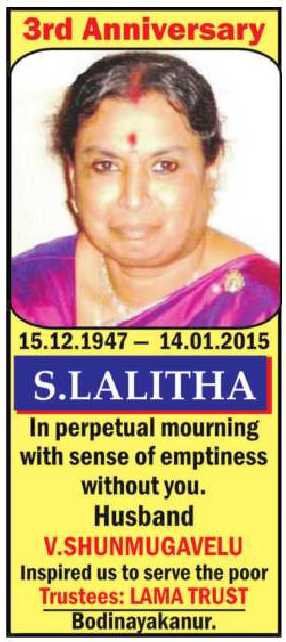
This memorial advertisement was published by the family of S. Lalitha in The Hindu Newspaper, Chennai Edition on 14 January 2018, the auspicious occasion of Pongal. The notice marks the 3rd death anniversary of S. Lalitha, a loving tribute published by those who hold her memory close to their hearts, remembering and honouring her on a day that carries deep significance both as a personal milestone of loss and as a festival of gratitude and new beginnings.
About This Memorial Advertisement
Publishing a death anniversary memorial in The Hindu is one of the most meaningful ways a family can honour a loved one who is no longer with them. The third anniversary of a passing is a particularly poignant milestone, a moment when the initial rawness of grief has softened into a quieter, more reflective form of remembrance, and when families often feel a renewed need to express publicly that the person they have lost is still deeply present in their thoughts and affections.
The choice to publish this memorial on Pongal day carries its own special significance. Pongal is a festival rooted in gratitude, in giving thanks for the abundance of life and the bonds between people. For a family remembering a loved one on this day, the notice becomes both a tribute to the person they have lost and a quiet acknowledgement that even in grief, the warmth of memory is itself a form of abundance that sustains and comforts those who are left behind.
The Significance of Death Anniversary Memorials
In South Indian culture, and in Tamil families in particular, marking death anniversaries through memorial notices in respected newspapers like The Hindu is a long-standing and deeply meaningful tradition. These annual tributes serve purposes that go far beyond the practical:
- Continuing the Bond of Love: A published memorial tells the world that the love between the departed and those who remember them does not diminish with time. Three years after a loss, the act of publishing a memorial notice is a powerful statement that the person remains as present and as cherished as ever in the family’s daily life.
- Communal Remembrance: Friends, neighbours, former colleagues, and community members who see the memorial notice in The Hindu are given an opportunity to pause and share in the family’s remembrance, recalling their own memories of the person and perhaps reaching out to the family with words of comfort and solidarity.
- Cultural and Religious Significance: For many Tamil families, marking death anniversaries through public tributes is part of a broader framework of religious and cultural observance that honours the departed and acknowledges the continuing relationship between the living and those who have passed on.
- Preserving Legacy: A published memorial in The Hindu creates a permanent printed record that the family can preserve, ensuring that S. Lalitha’s name and memory are captured in a respected and enduring medium that future generations of the family can look back on with pride and with love.
- Comfort for the Bereaved: There is a quiet comfort in the act of publishing a memorial, in giving form and public expression to a grief that might otherwise feel entirely private. Families who mark anniversaries in The Hindu often describe the process as a way of feeling connected to their loved one on a day when the absence is felt most keenly.
The Special Meaning of a Pongal Memorial
For families whose loved ones passed away around the time of Pongal, the festival itself becomes intertwined with the experience of grief and remembrance in a way that is both painful and, over time, deeply meaningful. Pongal is a day when families gather, when thoughts naturally turn to those who are no longer at the table, and when the warmth of the festival throws into gentle relief the absence of those who are deeply missed. Publishing a memorial notice in The Hindu on Pongal day is a way of including the departed in the family’s celebration, of saying that they are remembered not just in sorrow but in the fullness of life’s most joyful occasions.
Why Families Choose The Hindu for Memorial Notices
Across generations, Chennai’s families have returned to The Hindu year after year for memorial and remembrance notices, and the reasons reflect the newspaper’s unique qualities as a platform for such deeply personal communications:
- Reach and Visibility: The Hindu is read by hundreds of thousands of households in Chennai, ensuring that a memorial notice published on a significant day like Pongal reaches the broadest possible circle of people who knew and cared for the departed.
- Dignity and Permanence: A memorial published in The Hindu carries a dignity and a permanence that reflects the seriousness with which the family holds the memory of their loved one. The newspaper’s reputation for quality and respect makes it the most fitting platform for such a tribute.
- Festival Edition Readership: The Hindu’s Pongal edition is among the most widely read issues of the entire year, ensuring that a memorial published on this day reaches an exceptionally large number of readers who may have known the departed.
- Dedicated Memorial Section: The Hindu carries a well-organised and respectfully presented obituary and memorial section where readers specifically look for such notices, ensuring that the tribute is found by those who matter most to the grieving family.
- Simple Online Booking: The Hindu’s online booking facility allows families to submit and schedule memorial notices easily and without needing to visit offices, making the process as straightforward as possible at what is always an emotionally demanding time of year.
Types of Memorial and Obituary Notices in The Hindu
Death Anniversary Memorial Notices
Published on the first, second, third, or subsequent anniversaries of a loved one’s passing, these notices typically feature the person’s name, a photograph, the dates of their birth and passing, a brief message of love and remembrance from the family, and sometimes a verse, prayer, or meaningful quote that captures the spirit of the person being honoured.
Fond Remembrance Notices
Similar in nature to anniversary memorials, fond remembrance notices can be published on any significant date including birthdays, wedding anniversaries, or other meaningful occasions. They are characterised by a warm and personal tone that focuses on celebrating the life and qualities of the departed rather than the fact of their absence.
Immediate Bereavement Notices
Published in the immediate aftermath of a loss, these notices inform the public of the bereavement and provide details of the funeral, cremation, or prayer meeting, ensuring that all who wish to pay their last respects are able to do so.
Display Memorial Advertisements
For more elaborate tributes, particularly for well-known individuals or when a family wishes to create a more significant and lasting memorial record, display obituary and memorial ads in The Hindu allow for larger photographs, longer tributes, and contributions from multiple family members and organisations.
Publishing a Memorial Notice in The Hindu
If you would like to honour a loved one with a death anniversary memorial or a fond remembrance notice in The Hindu, the process is designed to be as simple and compassionate as possible. The entire booking process is available online, allowing families to plan and submit their tribute at any time without needing to visit offices or navigate complex procedures during what is always an emotionally significant time. You can book your memorial or obituary notice in The Hindu online by selecting your preferred format, edition, and publication date to ensure that your tribute to your loved one appears with the dignity and visibility it deserves.
To understand the cost of different memorial notice formats before making your decision, you can check the obituary and memorial advertisement rates for The Hindu across all available formats and editions, helping you choose the option that best honours your loved one’s memory within your means.